Blog Archives
Turning Silence into Strength: How I Finished “Baseball Card Heroes” Without the Support I Thought I Needed
Sometimes in life, we expect certain people to be there for us—the friends, family, and mentors we rely on to cheer us on and offer support. We tell ourselves, “If they just believed in me, I could accomplish anything.” But what happens when the people we think will stand beside us aren’t there when we need them the most?

This is my story of finishing my book, Baseball Card Heroes, even though I felt like the world around me was silent… and even though the friends I thought would support me didn’t show up the way I imagined.
I’d been working on my book for a long time—Baseball Card Heroes has been a dream of mine for years. It’s not just another sports book. It’s a love letter to the game, a tribute to the players who have inspired me, shaped my life, and taught me about perseverance. Writing it was not just about documenting baseball history; it was a personal journey, a way for me to connect with my heroes and, in some small way, become one myself.
But here’s the truth: when I started, I thought I’d have the support I needed. I envisioned long conversations with friends about ideas, people rooting for me, offering encouragement. Instead, I faced silence. No replies to my messages. No feedback. It felt like I was walking this journey alone, and at times, I wondered whether my dream was even worth chasing.
There were days when I wanted to give up, days when I questioned whether I could continue without that external validation. It’s a tough feeling to want to share something you’re passionate about, only to hear crickets in return. I thought about all those moments where friends had cheered me on in the past and wondered why they couldn’t do the same now.
I asked myself: Why do I need them? Why do I need their approval to validate this passion?
The answer came slowly but surely: I don’t need them to make this dream come true.
As much as I had hoped for that external encouragement, I had to turn inward. I had to dig deeper, rely on my own belief in the project, and trust that if I kept working, kept writing, I would finish this book—regardless of the silence surrounding me.
With each chapter I wrote, the absence of external validation became less important. Instead of looking for applause from others, I focused on what I was doing. I thought about the heroes who had inspired me—the athletes, the legends, the underdogs—and I realized that this book was about them. This was my gift to the game, my way of giving back to something I loved so deeply.
I didn’t need anyone else to tell me it was worth it.
And then, the day came. I had written the final sentence of Baseball Card Heroes. There was no big celebration. No party. No high fives. I sat in my chair, quietly, with the realization that I’d done it—despite the silence. Despite the moments of doubt. Despite the friends who didn’t show up in the way I thought they would.
It wasn’t about them. It was about me. And it was about the heroes who had shaped my life.
Finishing Baseball Card Heroes taught me a powerful lesson: Sometimes, the only person you need to believe in you is yourself. The journey isn’t always going to be easy, and the people you think will cheer you on might not be there when you need them the most. But that doesn’t mean you can’t finish. It doesn’t mean your dreams are any less valid.
If you have something you’re passionate about, something that drives you—even if you feel like you’re doing it alone—keep going. You don’t need anyone’s permission. The only thing you need is to keep moving forward, even if it feels like you’re the only one in the room.
As for me, I’m proud of what I’ve accomplished. The journey wasn’t easy, but it was mine. And the silence? It just became the background noise to the story I was telling—one about perseverance, passion, and the realization that sometimes, you’re your own biggest fan.
Baseball Card Heroes is now finished, and I’m more excited than ever to share it with the world. But the most important thing I learned along the way was that it was never about waiting for others to believe in me. It was about believing in myself.
And that, in the end, is all I really needed.
Books: Pick up a copy of “Tom Candiotti: A Life of Knuckleballs” today!
Here is another video promoting the baseball biography that I wrote about former knuckleball pitcher Tom Candiotti. Check it out!
Here’s a recent review on Amazon from a reader:

Need that link again to get the book? Here it is: amzn.to/1w4M2ym
Or, simply click here to get your own copy today!
Books: Pick up a copy of “Tom Candiotti: A Life of Knuckleballs” today!
What’s this? A video promoting the baseball biography that I wrote about former knuckleball pitcher Tom Candiotti. Check it out!
Didn’t catch that link? Here it is again: amzn.to/1w4M2ym
Or, simply click here to get the book today!
Baseball: Why is the knuckleball such an important style of pitching?
First off, congratulations to the Vancouver Canadians and Hillsboro Hops for advancing to the Northwest League Championship Series, which begins on Saturday, September 6th. Vancouver, after finishing ahead of Tri-City for the second-half pennant and sweeping Spokane in the North Division Finals, is gunning for its fourth straight Northwest League title. Hillsboro, meanwhile, is in the finals for the first time in only its second season in the league, after the franchise relocated from Yakima, Washington.
Congratulations to both organizations.
Now, moving on to another topic…. On Quora.com, which is a Q&A website where questions are created, answered, edited, and organized by its community of users, I was recently asked the following question:
Why is the knuckleball such an important style of pitching in the game of baseball?
Here was my response on Quora:
Very few pitchers throughout the history of baseball have mastered the art of throwing the knuckleball, which is a difficult pitch to learn. It is also a difficult pitch to hit as well, as even the best hitters in the major leagues have trouble with the pitch because they are used to seeing 90-mph fastballs and the knuckler throws their timing off.
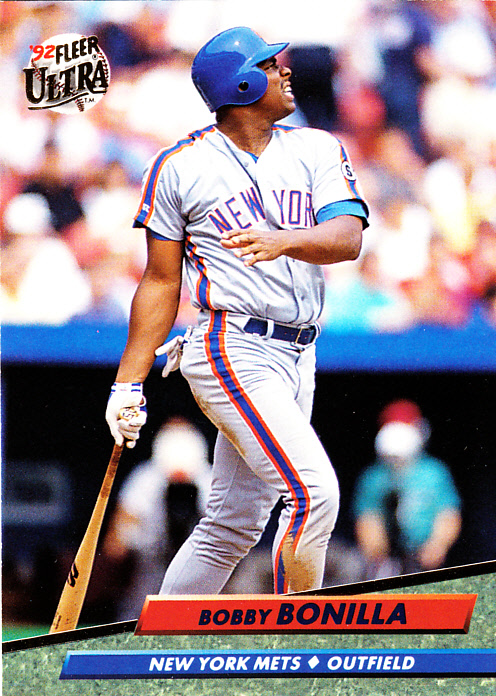
Bobby Bonilla was one of many major-leaguers who hated facing Candiotti’s knuckleball.
Tom Candiotti, a knuckleballer who pitched in the majors from 1983 to 1999, told me on several occasions that All-Stars such as Tony Gwynn, Barry Bonds, and Bobby Bonilla always told him they never liked facing him and that knuckleball because it messed up their swing for a whole week after seeing it! Bonilla, a switch-hitter, didn’t want to bat left-handed against the right-handed Candiotti, because he was afraid it would mess up his left-handed swing.
Fred Claire, a former Los Angeles Dodger general manager, also once told me that having a knuckleball pitcher as part of your starting rotation helps to give opposing hitters a different look, to take their timing off. Claire’s Dodgers in the 1990s had only right-handed starting pitchers for several years, and he mentioned having Candiotti on the staff was valuable because his knuckleball broke up the pitching pattern, so that the opposition would be seeing different pitches and different speeds during a three-game series, instead of the same 90-95 mph fastballs all the time. The knuckleball simply messes up hitters’ timing.
 The Toronto Blue Jays thought so highly of that knuckleball too that they specifically had Candiotti start Game One of the 1991 ALCS so that he could try to mess up the Minnesota Twins hitters’ timing. So, manager Cito Gaston went with a rotation of Candiotti-Juan Guzman-Jimmy Key-Todd Stottlemyre in that series, with a soft-tossing knuckleballer going first followed by a hard thrower (Guzman), then a soft-tossing finesse pitcher (Key) and another hard thrower (Stottlemyre).
Pat Gillick, the Hall of Fame general manager who acquired Candiotti in Toronto, told me that he liked the change of pace that Candiotti brought to the Blue Jays pitching staff, because he could be put in the rotation in between a guy like Guzman and David Wells, another hard thrower.
Yes, there were other knuckleballers in the major leagues such as the Niekro brothers, Charlie Hough, Tim Wakefield, and R.A. Dickey since the 1960s. But Tom Candiotti was almost just as effective with the knuckleball. To read more about Candiotti’s career, check out Tom Candiotti: A Life of Knuckleballs, which can be found on Amazon.


 k. p. wee