Category Archives: Sports
A busy weekend, part 2
Regarding this post, oh yeah, the 26th was my birthday. Also, there were some things that could have changed the schedule which I didn’t mention originally.
- I received a text on Thursday the 23rd from a school that I did on-call teaching for — to see if I could fill in as a substitute on that Friday. I saw my existing schedule and declined.
- I received a text on early Friday morning after my Thursday overnight shift to see if I could do 3pm-11pm or 6pm-2am instead of the overnight shift (which would have worked out better). I didn’t see the text in time and that request was no longer necessary by the time I saw the message.
Then, the following weekend, Oct. 31 to Nov. 2, it was supposed to be this schedule:
- Friday, 31st: online class from 12-2pm (after my Thursday 11pm-7am in-studio commentator job), then in-person tutoring from 3-5pm, then an on-call in-studio commentator shift from 11pm-7am
- Saturday, 1st: hockey doubleheader (be at the rink by 1:30pm), followed by a regular in-studio commentator shift from 11pm-7am
- Sunday, 2nd: hockey doubleheader (be at the rink by 8am).
A few days before the 1st, I received notification that the hockey doubleheader will be a single game both days of the weekend. One of the teams (the one that lost 12-0 and 19-0 the weekend before) was having its games postponed, lessening my workload. (A few days later, the team announced it was folding for the season. I checked the remaining schedule for the season; with this team folding, there won’t be any more scheduled weekend doubleheaders for the rest of 2025-26.)
Also, I was notified early Friday morning that the on-call Friday night Halloween shift became a regular shift.
So, it became Thursday overnight, sleep a few hours, online class on Friday starting at noon, commute to an in-person class, rest a few hours, commute to the Friday overnight, sleep a few hours at home, commute to the hockey rink on Saturday by 1:30pm, finish hockey by 5pm-ish, return home for some rest for a couple of hours, do the Saturday overnight shift, then Uber home to get ready for hockey at 8am on Sunday morning.
I did all of the shifts without missing a beat. Sure, I was tired, but things went all right.
Oh yeah, the Saturday overnight shift was an hour longer — because the clocks moved backwards that weekend on Sunday morning at 1am/2am. So, it was nine hours for the overnight shift. Fortunately, there was a two-hour break due to scheduled monthly maintenance work on the equipment that we use in the studio.
A busy weekend (Oct. 24-26, 2025)
It was a busy weekend from Oct. 24 to 26, 2025.
These days, I have teaching/tutoring as well as hockey commentary, and I also recently began work as an in-studio/on-camera games commentator in the gaming industry. (There were 11 of us being trained at the same time; on the first day we were asked to say why we wanted to work there, and my answer was succinct: “I would like to be on camera.”)
My in-studio work is all overnight shifts, eight hours daily ending at 7am.
So, the weekend of Oct. 24 to 26 presented an interesting schedule.
I had a 3-5pm in-person tutoring session on Friday the 24th. Then I returned home to sleep for a few hours before commuting to my overnight in-studio/on-camera commentating work. That finished at 7am, and I returned home to sleep for a few more hours before heading to the hockey rink at 1:30pm. It was a doubleheader slate but I stayed only for the first game and left after that contest (around 5pm) due to some family emergency. Then I returned to the in-studio overnight job and again that finished at 7am.
Next, I returned home and then commuted to the hockey rink at 8am for another doubleheader. I stayed for both games this time. The second game ended around 2pm, and then it was returning home again for some much-needed rest. (Note: It wasn’t easy; it was talking non-stop for the in-studio commentator job, and then the Saturday hockey game that I did play-by-play for, the opposition won 12-0. On Sunday, the early game ended 19-0 for the opposition. So, none of that was easy.)
The weekend of Oct. 31-Nov. 2 will present a similar challenge. I’ll be back to post about it!
“I Guess I’m a Dumbass” — My Podcasting Story So Far
People think I’m an idiot. I don’t know why exactly—but I feel it when they scoff at me for doing a podcast. It’s a hobby. I like I enjoy conversations, asking questions, putting together ideas. I write all my interview and conversation prompts myself. I do it because it’s something I care about.
For a while, I outsourced the editing. I wanted to save time and thought getting a professional to handle the technical part would be worth the cost. I paid someone—let’s just call her my podcast editor—for that work. And man, that decision taught me a few hard lessons.
Here’s what happened:
1. Intro Music Drama
I wanted the intro music to be 15–20 seconds. She cut it to 5. Her reasoning? “Anything longer will turn away listeners.” Okay, I thought, maybe she knows more than I do. I trusted that feedback. In hindsight, it was just the first red flag. My vision was getting tweaked in the name of “audience appeal”—without actual audience input.
2. The Book Title Butchered
I interviewed an author whose book was titled Race Against…Against Race. Yes, the repetition was intentional—it was part of the book’s message and structure. But the editor decided that the repeated “against” must’ve been a mistake, and every single time the title came up, she cut it down to Race Against Race. Totally changed the meaning and made me sound like I didn’t even know the name of the book I was referencing. I had to ask her to go back and fix every instance. She wasn’t happy about it.
3. Private Conversation Left In
I did an episode with a retired goalie. At the end of the recording, there was a private conversation I explicitly told her to remove. Guess what made it into the final episode? Yep. That private part. Had to ask for another fix, and by then, I was already exhausted by this whole “outsourcing” thing.
4. Fast Cuts with the San Diego Chicken
This one still bugs me. I had the chance to interview the famous San Diego Chicken. It was a fun, natural conversation with human pauses—normal pacing. But the editor decided to cut all the pauses. The result? I came off as someone who kept cutting him off, over and over. Her explanation? “People don’t want to hear pauses—they want fast-paced flow.”
Really? Is that what podcasting’s about—sounding like a robot?
After all that, I decided to stop using her. It was costing me money, time, and worst of all—my voice. I was paying for “professional” editing but ended up feeling like I had to recheck every second, every word. I wouldn’t be surprised if she used AI to do most of the work, barely listened to the content, and still sent an invoice.
The last straw? She made a comment mocking me for podcasting as a “hobby.” That stung more than I expected. I was paying her, trusting her—and in the end, I got mocked for caring about something.
So yeah—maybe I’m a dumbass. Or maybe people just don’t get that doing something for love, not money, doesn’t make it worthless.
This is still my show. Still my hobby. Still my passion.
You don’t have to be famous or paid to create something real.
Wait… there’s more. Think that editor was bad? She’s just part two of the saga. Part one started with a “friend” who thought charging $500 for basic advice was totally normal.
Before I even recorded a single episode, there was this one “friend” who gave me a masterclass in how not to help someone
5. The $500 “Friend” Who Failed Me Twice
Before I even started the podcast—back in 2020—I reached out to someone I thought was a friend. He’d been doing podcasting longer than I had, so I figured: why not ask for some tips? I was brand new and just trying to get my footing.
He said, “Sure, I’ll help you out. I’ll even write everything down for you—what gear to buy, how to get started, what software to use…”
Then came the punchline: $500.
Just to tell me what mic to buy and how to hit record.
Oh, and a fee for each episode he’d help produce going forward.
Seriously?
This was stuff I ended up researching and figuring out on my own in less than an hour. But he tried to turn it into a full-on business transaction. This wasn’t mentorship or friendship—it was a sales pitch.
And the kicker? This same guy had already failed me twice before that.
Failure #1:
He once interviewed me for his podcast, back when I was still new and inexperienced. During the conversation, I was fidgeting with my keys—not realizing the mic would pick up all the noise. He had the experience. He should’ve said something during the recording. Instead, he just let it happen. I only found out about it after the episode was published—and by then, I sounded like a distracted amateur.
So much for the seasoned vet looking out for the rookie.
Failure #2:
Another time, I was a guest on his show again—this time to talk about a book I’d written about a baseball player. He completely butchered the player’s name. Over and over. I had even told him beforehand how to pronounce it, and he still got it wrong throughout the conversation.
He thought it was funny.
I didn’t.
And I’m sure the player wouldn’t either.
So this guy, who had twice shown a lack of care, preparation, or professionalism, suddenly wanted to charge me $500 upfront and then ongoing fees to help me with my own podcast?
People really will sell you back your own common sense and call it expert advice.
Needless to say, I didn’t take the offer. I figured it out on my own. And honestly, I’m glad I did.
The baseball card heroes book
So, when I first started collecting baseball cards, the Score 1991 cards of Otis Nixon and Tom Browning were the first ones I got.
I did not get packs of cards like other kids did. I essentially collected one by one. Among the first ones were Brett Butler (1992 Score), Cory Snyder (1992 Score in Blue Jays uniform), Joe Boever (1992 Score), Arthur Rhodes (1992 Score), Dave Martinez (1992 Score), Brian Holman (1991 Score), and Stan Royer (1992 Score).
I didn’t interview those but got to instead write the stories of Nixon, Browning, Herm Winningham, Casey Candaele, Howard Johnson, Bob MacDonald, Scott Livingstone, Greg A. Harris, Bob Walk, Don Slaught, Steve Buechele, Donn Pall, Bret Saberhagen, Mark Gubicza, Gil Reyes, and Luis Alicea.

Staying up for New Zealand play-in basketball…
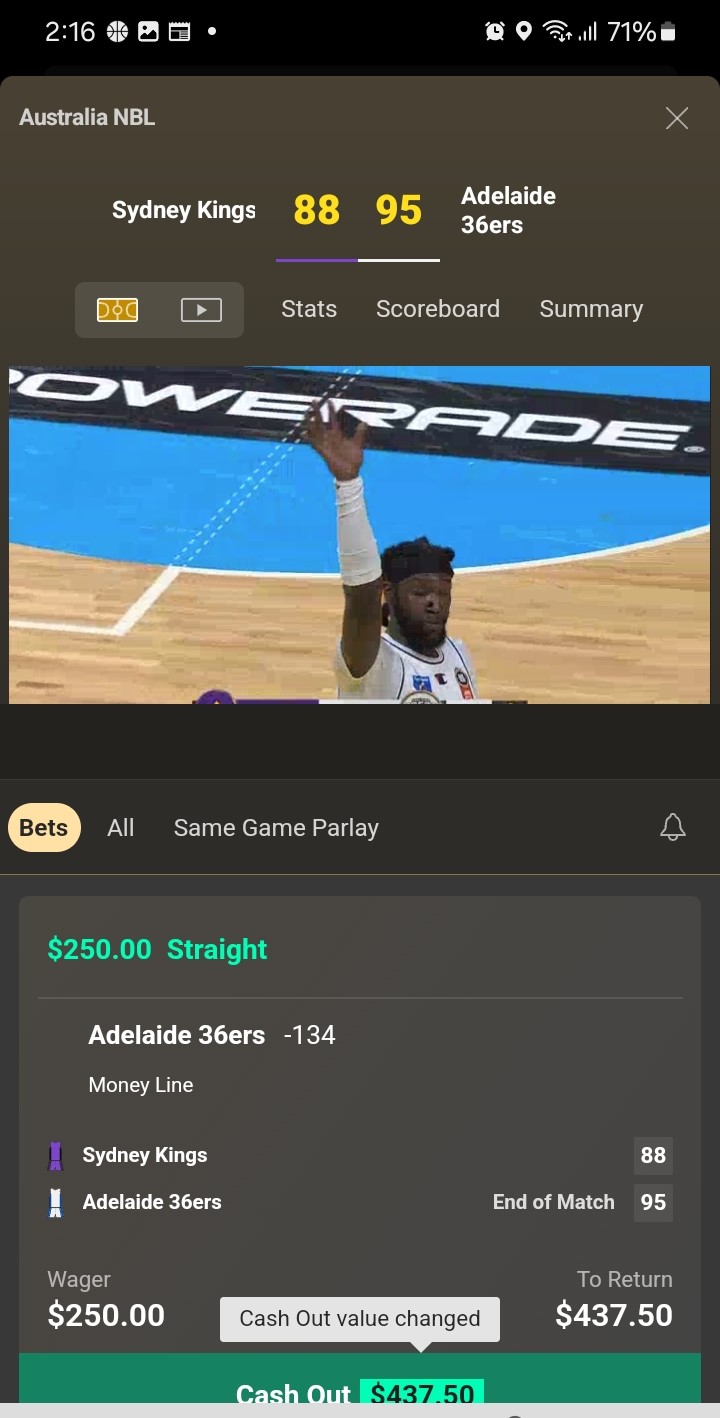
I regularly rely on others to make my investment picks… but this one was all me. Nobody that I know pays attention to New Zealand basketball. I stayed up to watch and invest in this particular play-in game. The 6th-place 36ers defeated the 5th-place Kings.


 k. p. wee